Saturday, November 25, 2006

QUERIES ON ISLAM


QUERIES ON ISLAM


1. Praying Behind Beardless Imam

2. In Japan, only eight rakat Tarawih is followed. Can my son pray individually the remaining 12 rakat at the mosque or home or is it also right to perform 8 rakat only.?

3. Is it allowed for an ulcer patient to leave the Fast ?

4. Issal-e-Sawab through Recitation of the quran

5. If at a particular time, a lady has no desire for sex with her husband, but he insists for it, what is her right of refusal in this context ?

6. In the light of the teaching of the Qur'an and the Sunnah, is it a correct Islamic practice to visit graveyards on the night of Shab-e-baraat? please narrate the Hadith related to this night.

7. A muslim youth has a wet dream. What should he do?

8. What is the concept of social service in Islam? Do we have to work for the Muslim community only or for the whole of humankind as was done by Prophet Muhammad (Pbuh) ? Please clarify.

9. Are menstruating women permitted to recite Surah Fatiha, Ikhlaas, Falak, Nas and Ayatul Kursi at night before going to sleep ? Can menstruating women touch and read the Qur'an ? Does this word in the Qur'an 'Mutahhareen' (none can touch except those who are clean) relate to the Qur'an or to the Tablet Preserved (Lauh-a-Mehfuz) ? Is one allowed to touch Qur'an without wudhu ? Please explain with reference to Hadith.

10. Why do we quote Allah (swt) as - Him/His ?

11. Islam and Universal Brotherhood - Part 1

12. Islam and Universal Brotherhood - Part 2

13. Which school of thought should a muslim follow ?

14. Islam and Universal Brotherhood - Part 3

15. Why Islam proposes a discriminatory share of Inheritance by giving women only half of what men receive?

16. Islam and Universal Brotherhood - Part 4

17. Does Islam make the Face Veil Obligatory for Muslim Women?

18. Islam and Universal Brotherhood - Part 4 ....Cont

19. I heard a Maulana saying that it is Biddat to quote the Bible to do Daw’ah to the Ahle-Kitab (People of the Book; i.e. the Jews and the Christians). I would like to get the answer from Dr. Zakir Naik whether it is allowed as he very often quotes the Bible.

20a. Is the Qur'an God's Word ?

20b. Is the Qur'an God's Word ? - Part 2

20c. Is the Qur'an God's Word ? - Part 3

20d. Is the Qur'an God's Word ? - Part 4

20e. Is the Qur'an God's Word ? - Part 5

20f. Is the Qur'an God's Word ? - Part 6

20g. Is the Qur'an God's Word ? - Part 7

20h. Is the Qur'an God's Word ? - Part 8

20i. Is the Qur'an God's Word ? - Part 9

20j. Is the Qur'an God's Word ? - Part 10

20k. Is the Qur'an God's Word ? - Part 11

21. A lady I know converted to Islam, but her Christian parents want her to visit the church with them. If she denies, then they have family problems. Can the lady go to church, just to have normal relationship with the parents?

22. I am a revert to Islam from a very orthodox Christian family. However my hunger to delve deep into Islam and other religions never ceased. The sad part of the story is that I never found anyone able to give at least most of the answers for the questions I ask. But your newsletter seems to be doing a good job. Here are a few questions I wish you could answer.

a. Why aren’t Islamic missionaries active the way Christian missionaries are? Won’t Islam grow much faster and misunderstandings removed if there are good scholars to preach the faith? Why is there such a slack among Muslims?

b. Is it permissible in Islam to sponsor an orphan? Not adoption. Something like sponsoring his education, etc.?

c. Are the views of the so-called ‘terrorists’ like bin Laden really wrong or justifiable? I mean should a Muslim support his activities? Can children and innocent people be killed in wars when the prophet had declared not to do so?

23. Do the Muslims Believe in Jesus (pbuh) and his Second Coming?

24. Is it Compulsory to Wear the Trousers Above the Ankles?

25. Dr. Zakir Naik talk Proves a big draw in Bangalore

26. How Shameful, We Don't Have a Media of Our Own!

27. I am a dentist by profession, my questions are: If a husband and wife have a mutual divorce,

a. Is there an ‘Iddah period to be observed by the divorced wife?
b. Should the divorced husband give the maintenance money for her?
c. Can the divorced husband have sex with the divorced wife?
d. Can the two talk on the phone to each other after the divorce?


28. Is a Muslim woman permitted to go out for a job (organization belongs to Muslims with all women staff) even if her husband can support the family well? What does Islam say about it? In this case the main reason why this woman wants to join this organization is to keep her busy and to mould herself completely in an Islamic environment.


29. (a) Can a rich Muslim wife give portion of her Zakat to her poor husband?

(b) Can a Muslim husband compel his wife (working in a public sector undertaking) to spend all her earnings on family needs and invest his earnings and his wife’s savings on assets solely in his name and not even in her name?

(c) What portion, if at all, of a Muslim wife’s salary a Muslim husband can claim for needs of the family although it is the onus on him to provide for the family?


30. Is it allowed for a wife to address her husband by his name, as our previous generation didn’t do so?


31. What is the Islamic Ruling on Contraception?


32. Da'wah or Islaah - which is more important?


33. Is Islam a cult? I don't understand how this religion can be embraced by so many. It's inconceivable that such hatred has ever been collected in a single population such as that which calls itself Muslim. Mohammad, and indeed, his followers, are way off the path. Stop your attacks on non-Muslims?


34. Religion, if it is true, should be able to stand scientific scrutiny. Is there an Islamic arena where this kind of discussion is possible?


35. Hinduism is the oldest of all the religions and thus the most pure, authentic and best of all the religions of the world, and not Islam!


36. When Muslims in India insist on having a separate Muslim Personal Law for themselves, why don’t they also insist on implementing the Islamic Criminal Law for the Muslims; for example implementing the rule that the robber’s hands should be chopped off if a Muslim robs?


37. Why do Muslims bury dead bodies instead of cremating them, i.e. burning them?


38. Is there no such thing as a 'Will' in Islam? In Islam, can a person 'Will' his assets or property as per his wishes, after his death, to people other than those prescribed in the methods of the Shari’ah? Is this 'Will' legally valid in India?


39. Does a Muslim man require explicit consent from his first wife, to marry a second woman?


40. Similarities Between Islam and Hinduism - Part 1


40a. Similarities Between Islam and Hinduism - Part 2


40b. Similarities Between Islam and Hinduism - Part 3


40c. Similarities Between Islam and Hinduism - Part 4


40d. Similarities Between Islam and Hinduism - Part 5


40e. Similarities Between Islam and Hinduism - Part 6


40f. Similarities Between Islam and Hinduism - Part 7


40g. Similarities Between Islam and Hinduism - Part 8


40h. Similarities Between Islam and Hinduism - Part 9


41. A few people in our locality raise their hands before and after doing ‘Rukoo’. Is it a correct act while praying?


42. I am told by many people that it is not permissible to read the Qur’an or do Sajdah after Asr prayers and that we cannot pray, be it reading Qur’an or Namaz at 12.00 clock. Kindly reply!


43. Can a Muslim man marry a Christian or a Jew? Please explain.


44. It is mentioned in your Qur’an that Mary was the sister of Aaron (pbuh). Prophet Muhammad (pbuh) did not know the difference between Miriam the sister of Aaron (pbuh) and Mary the Mother of Jesus (pbuh), as the time span between both of them was about a thousand years.


45. I have a doubt about playing of musical instruments. Is this an act of Satan?


46. Is man created from sperm or dust?


47. I am Bilal. I’d like to know about hair coloring according to Qur’an and Hadith. I came to know that it is permissible. Is it right? Please explain providing evidence from authentic sources of Islam.


48. Is it true that my last prayer should be witr or is this merely recommended as a prudent course of action by the Prophet (saw). Once I pray witr after Isha and later I want to pray Nafil, can I do so?


49. It is with great trepidation and alarm and not a little grief that I read the article that you published in your magazine written by Dr. Zakir Naik declaring that Allah Subhanahu wa ta’ala may be called by any name that a person finds to his liking.


50. Why are women not allowed in the mosque?


51. Why do Muslims follow the lunar calendar instead of the solar calendar?


52. Why are all prayers and supplications not answered or fulfilled by Allah (SWT)?


53. Why is building of temples and churches and the propagation of any religion other than Islam not allowed in Islamic countries like Saudi Arabia?

QUR’AN PLAGIARIZED FROM THE BIBLE


TEN MOST COMMON QUESTIONS ASKED BY CHRISTIAN MISSIONARIES AGAINST ISLAM

by

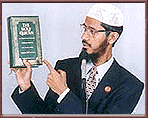
Dr. Zakir Naik


1. QUR’AN PLAGIARIZED FROM THE BIBLE :


Question

Is it not true that Prophet Muhammad (pbuh) has copied the Qur’an from the Bible?

Answer

Many critics allege that Prophet Muhummad (pbuh) himself was not the author of the Qur’an but he learnt it and/or plagiarised (copied or adapted) it from other human sources or from previous scriptures or revelations.

1. MUHUMMAD LEARNT THE QUR’AN FROM A ROMAN BLACKSMITH WHO WAS A CHRISTIAN


Some Pagans accused the Prophet of learning the Qur’an from a Roman Blacksmith, who was a Christian staying at the outskirts of Makkah. The Prophet very often used to go and watch him do his work. A revelation of the Qur’an was sufficient to dismiss this charge - the Qur’an says in Surah An-Nahl chapter 16 verse 103:

"We know indeed that they say, ‘It is a man that teaches him,’ The tongue of him they wickedly point to is notably foreign, while this is Arabic, pure and clear."
[Al-Qur’an 16:103]

How could a person whose mother tongue was foreign and could hardly speak little but of poor broken Arabic be the source of the Qur’an which is pure, eloquent, fine Arabic? To believe that the blacksmith taught the Prophet the Qur’an is some what similar to believing that a Chinese immigrant to England, who did not know proper English, taught Shakespeare.

2. MUHUMMAD (PBUH) LEARNT FROM WARAQA - THE RELATIVE OF KHADIJAH (RA)


Muhummad’s (pbuh) contacts with the Jewish and Christian Scholars were very limited. The most prominent Christian known to him was an old blind man called Waraqa ibn-Naufal who was a relative of the Prophet’s first wife Khadijah (r.a.). Although of Arab descent, he was a convert to Christianity and was very well versed with the New Testament. The Prophet only met him twice, first when Waraqa was worshipping at the Kaaba (before the Prophetic Mission) and he kissed the Prophet’s forehead affectionately; the second occasion was when the Prophet went to meet Waraqa after receiving the first revelation. Waraqa died three years later and the revelation continued for about 23 years. It is ridiculous to assume that Waraqa was the source of the contents of the Qur’an.
3. PROPHET’S RELIGIOUS DISCUSSIONS WITH THE JEWS AND CHRISTIANS


It is true that the Prophet did have religious discussions with the Jews and Christians but they took place in Madinah more than 13 years after the revelation of the Qur’an had started. The allegation that these Jews and Christians were the source is perverse, since in these discussions Prophet Muhammad (pbuh) was performing the roles of a teacher and of a preacher while inviting them to embrace Islam and pointing out that they had deviated from their true teachings of Monotheism. Several of these Jews and Christians later embraced Islam.
4. THE PROPHET LEARNT THE QUR’AN FROM THOSE JEWS AND CHRISTIANS THAT HE MET OUTSIDE ARABIA


All historical records available show that Muhummad (pbuh) had made only three trips outside Makkah before his Prophethood:
At the age of 9 he accompanied his mother to Madinah.

Between the age of 9 and 12, he accompanied his uncle Abu-Talib on a business trip to Syria.

At the age of 25 he led Khadija’s Caravan to Syria.

It is highly imaginary to assume that the Qur’an resulted from the occasional chats and meetings with the Christians or Jews from any of the above three trips.

5. LOGICAL GROUNDS TO PROVE THAT THE PROPHET DID NOT LEARN THE QUR’AN FROM JEWS OR CHRISTIANS


The day-to-day life of the Prophet was an open book for all to see. In fact a revelation came asking people to give the Prophet (pbuh) privacy in his own home. If the Prophet had been meeting people who told him what to say as a revelation from God, this would not have been hidden for very long.

The extremely prominent Quraish nobles who followed the Prophet and accepted Islam were wise and intelligent men who would have easily noticed anything suspicious about the way in which the Prophet brought the revelations to them - more so since the Prophetic mission lasted 23 years.

The enemies of the Prophet kept a close watch on him in order to find proof for their claim that he was a liar - they could not point out even a single instance when the Prophet may have had a secret rendezvous with particular Jews and Christians.

It is inconceivable that any human author of the Qur’an would have accepted a situation in which he received no credit whatsoever for originating the Qur’an.
Thus, historically and logically it cannot be established that there was a human source for the Qur’an.

6. MUHUMMAD (PBUH) WAS AN ILLITERATE


The theory that Muhummad (pbuh) authored the Qur’an or copied from other sources can be disproved by the single historical fact that he was illiterate.

Allah testifies Himself in the Qur’an
In Surah Al-Ankabut chapter no.29 verse 48

"And thou was not (able) to recite a Book before this (Book came), nor art thou (able) to transcribe it with thy right hand: in that case, indeed, would the talkers of vanities have doubted."
[Al-Qur’an 29:48]

Allah (swt) knew that many would doubt the authenticity of the Qur’an and would ascribe it to Prophet Muhummad (pbuh). Therefore Allah in His Divine Wisdom chose the last and final Messenger to be an ‘Ummi’, i.e. unlettered, so that the talkers of vanity would not then have the slightest justification to doubt the Prophet. The accusation of his enemies that he had copied the Qur’an from other sources and rehashed it all in a beautiful language might have carried some weight, but even this flimsy pretence has been deprived to the unbeliever and the cynic.

Allah reconfirms in the Qur’an in Surah Al A’raf chapter 7 verse 157:

"Those who follow the Messenger, the unlettered Prophet, whom they find mentioned in their own (Scriptures) in the Law and the Gospel"

The prophecy of coming of the unlettered Prophet (pbuh) is also mentioned in the Bible in the book of Isaiah chapter 29 verse 12.

"And the book is delivered to him that is not learned."
[Isaiah 29:12]

The Qur’an testifies in no less than four different places that the Prophet (pbuh) was illiterate. It is also mentioned in Surah A’raf chapter 7 verse 158 and in Surah Al-Jumu’a chapter 62 verse 2.

7. ARABIC VERSION OF THE BIBLE WAS NOT PRESENT


The Arabic version of the Bible was not present at the time of Prophet Muhummad (pbuh). The earliest Arabic version of the Old Testament is that of R. Saadias Gaon of 900 C.E. - more than 250 years after the death of our beloved Prophet. The oldest Arabic version of the new Testament was published by Erpenius in 1616 C.E. - about a thousand years after the demise of our Prophet.

8. SIMILARITIES IN THE QUR’AN AND THE BIBLE DUE TO COMMON SOURCE


Similarities between the Qur’an and the Bible does not necessarily mean that the former has been copied from the latter. In fact it gives evidence that both of them are based on a common third source; all divine revelations came from the same source - the one universal God. No matter what human changes were introduced into some of these Judeo-Christian and other older religious scriptures that had distorted their originality, there are some areas that have remained free from distortion and thus are common to many religions.

It is true that there are some similar parallels between the Qur’an and the Bible but this is not sufficient to accuse Muhummad (pbuh) of compiling or copying from the Bible. The same logic would then also be applicable to teachings of Christianity and Judaism and thus one could wrongly claim that Jesus (pbuh) was not a genuine Prophet (God forbid) and that he simply copied from the Old Testament.

The similarities between the two signify a common source that is one true God and the continuation of the basic message of monotheism and not that the later prophets have plagiarised from the previous prophets.

If someone copies during an examination he will surely not write in the answer sheet that he has copied from his neighbour or Mr. XYZ. Prophet Muhummad (pbuh) gave due respect and credit to all the previous prophets (pbut). The Qur’an also mentions the various revelations given by Almighty God to different prophets.

9. MUSLIMS BELIEVE IN THE TAURAH, ZABOOR, INJEEL AND QUR’AN


Four revelations of Allah (swt) are mentioned by name in the Qur’an: the Taurah, the Zaboor, the Injeel and the Qur’an.

Taurah, the revelation i.e. the Wahi given to Moosa (a. s.) i.e. Moses (pbuh).
Zaboor, the revelation i.e. the Wahi given to Dawood (a.s.) i.e. David (pbuh).
Injeel, the revelation i.e. the Wahi given to Isa (A.S.) ie. Jesus (pbuh).
‘Al-Qur’an’, the last and final Wahi i.e. revelation given to the last and final Messenger Muhammad (pbuh).

It is an article of faith for every Muslim to believe in all the Prophets of God and all revelations of God. However, the present day Bible has the first five books of the Old Testament attributed to Moses and the Psalms attributed to David. Moreover the New Testament or the four Gospels of the New Testament are not the Taurah, the Zaboor or the Injeel, which the Qur’an refers to. These books of the present day Bible may partly contain the word of God but these books are certainly not the exact, accurate and complete revelations given to the prophets.

The Qur’an presents all the different prophets of Allah as belonging to one single brotherhood; all had a similar prophetic mission and the same basic message. Because of this, the fundamental teachings of the major faiths cannot be contradictory, even if there has been a considerable passage of time between the different prophetic missions, because the source of these missions was one: Almighty God, Allah. This is why the Qur’an says that the differences which exist between various religions are not the responsibility of the prophets, but of the followers of these prophets who forgot part of what they had been taught, and furthermore, misinterpreted and changed the scriptures. The Qur’an cannot therefore be seen as a scripture which competes with the teachings of Moses, Jesus and the other prophets. On the contrary, it confirms, completes and perfects the messages that they brought to their people.

Another name for the Qur’an is the ‘The Furqan’ which means the criteria to judge the right from the wrong, and it is on the basis of the Qur’an that we can decipher which part of the previous scriptures can be considered to be the word of God.

10. SCIENTIFIC COMPARISON BETWEEN QUR’AN AND BIBLE


If you glance through the Bible and the Qur’an you may find several points which appear to be exactly the same in both of them, but when you analyse them closely, you realise that there is a difference of ‘chalk and cheese’ between them. Only based on historical details it is difficult for someone who is neither conversant with Christianity or Islam to come to a firm decision as to which of the scriptures is true; however if you verify the relevant passages of both the scriptures against scientific knowledge, you will yourself realize the truth.

Creation of the Universe in Six Days
As per the Bible, in the first book of Genesis in Chapter One, the universe was created in six days and each day is defined as a twenty-four hours period. Even though the Qur’an mentions that the universe was created in six ‘Ayyaams’, ‘Ayyaam’ is the plural of years; this word has two meanings: firstly, it means a standard twenty-four hours period i.e. a day, and secondly, it also means stage, period or epoch which is a very long period of time.

When the Qur’an mentions that the universe was created in six ‘Ayyaams’, it refers to the creation of the heavens and the earth in six long periods or epochs; scientists have no objection to this statement. The creation of the universe has taken billions of years, which proves false or contradicts the concept of the Bible which states that the creation of the Universe took six days of twenty-four hour durations each.

Sun Created After the Day
The Bible says in chapter 1, verses 3-5, of Genesis that the phenomenon of day and night was created on the first day of creation of the Universe by God. The light circulating in the universe is the result of a complex reaction in the stars; these stars were created according to the Bible (Genesis chapter 1 verse 14 to 19) on the fourth day. It is illogical to mention the result that is the light (the phenomenon of day and night) was created on the first day of Creation when the cause or source of the light was created three days later. Moreover the existence of evening and morning as elements of a single day is only conceivable after the creation of the earth and its rotation around the sun. In contrast with the contents of the Bible on this issue, the Qur’an does not give any unscientific sequence of Creation. Hence it is absolutely absurd to say that Prophet Muhummad (pbuh) copied the passages pertaining to the creation of the universe from the Bible but missed out this illogical and fantastic sequence of the Bible.

Creation of the Sun, The Earth and the Moon
According to the Bible, Book of Genesis, chapter 1, verses 9 to 13, the earth was created on the third day, and as per verses 14 to 19, the sun and the moon were created on the fourth day. The earth and the moon emanated, as we know, from their original star, the Sun. Hence to place the creation of the sun and the moon after the creation of the earth is contrary to the established idea about the formation of the solar system.

Vegetation Created on the third day and Sun on the fourth day
According to the Bible, Book of Genesis, chapter 1, verses 11-13, vegetation was created on the third day along with seed-bearing grasses, plants and trees; and further on as per verses 14-19, the sun was created on the fourth day. How is it scientifically possible for the vegetation to have appeared without the presence of the sun, as has been stated in the Bible?

If Prophet Muhummad (pbuh) was indeed the author of the Qur’an and had copied its contents from the Bible, how did he manage to avoid the factual errors that the Bible contains? The Qur’an does not contain any statements which are incompatible with scientific facts.

The Sun and the Moon both Emit light
According to the Bible both the sun and the moon emit their own light. In the Book of Genesis, chapter 1, verse 16 says, "And God made two great lights; the greater light to rule the day, and the lesser light to rule the night".

Science tells us today that the moon does not have its own light. This confirms the Qur’anic concept that the light of the moon is a reflected light. To think that 1400 years ago, Prophet Muhummad (pbuh) corrected these scientific errors in the Bible and then copied such corrected passages in the Qur’an is to think of something impossible.

11. ADAM (PBUH), THE FIRST MAN ON EARTH, LIVED 5,800 YEARS AGO

As per the genealogy of Jesus Christ given in the Bible, from Jesus through Abraham (pbuh) to the first man on earth i.e. Adam (pbuh), Adam appeared on the earth approximately 5800 years ago:


1948 years between Adam (pbuh) and Abraham (pbuh)
Approximately 1800 years between Abraham (pbuh) and Jesus (pbuh)
2000 years from Jesus (pbuh) till today
These figures are further confused by the fact that the Jewish calendar is currently on or about 5800 years old.

There is sufficient evidence from archaeological and anthropological sources to suggest that the first human being on earth was present tens of thousands of years ago and not merely 5,800 years ago as is suggested by the Bible.
The Qur’an too speaks about Adam (pbuh) as the first man on earth but it does not suggest any date or period of his life on earth, unlike the Bible - what the Bible says in this regard is totally incompatible with science.

12. NOAH (PBUH) AND THE FLOOD


The Biblical description of the flood in Genesis chapter 6, 7 and 8 indicates that the deluge was universal and it destroyed every living thing on earth, except those present with Noah (pbuh) in the ark. The description suggests that the event took place 1656 years after the creation of Adam (pbuh) or 292 years before the birth of Abraham, at a time when Noah (pbuh) was 600 years old. Thus the flood may have occurred in the 21st or 22nd Century B.C.

This story of the flood, as given in the Bible, contradicts scientific evidence from archaelogical sources which indicate that the eleventh dynasty in Egypt and the third dynasty in Babylonia were in existence without any break in civilisation and in a manner totally unaffected by any major calamity which may have occurred in the 21st century B.C. This contradicts the Biblical story that the whole world had been immersed in the flood water. In contrast to this, the Qur’anic presentation of the story of Noah and the flood does not conflict with scientific evidence or archaeological data; firstly, the Qur’an does not indicate any specific date or year of the occurance of that event, and secondly, according to the Qur’an the flood was not a universal phenomenon which destroyed complete life on earth. In fact the Qur’an specifically mentions that the flood was a localised event only involving the people of Noah.

It is illogical to assume that Prophet Muhummad (pbuh) had borrowed the story of the flood from the Bible and corrected the mistakes before mentioning it in the Qur’an.

13. MOSES (PBUH) AND PHARAOH OF THE EXODUS


The story of Moses (pbuh) and the Pharaoh of the Exodus are very much identical in the Qur’an and the Bible. Both scriptures agree that the Pharaoh drowned when he tried to pursue Moses (pbuh) and led the Israelites across a stretch of water that they crossed. The Qur’an gives an additional piece of information in Surah Yunus chapter 10 verse 92:

"This day shall We save thee in thy body, that thou mayest be a sign to those who come after thee! But verily, many among mankind are heedless of Our Signs!"
[Al-Qur’an 10:92]

Dr. Maurice Bucaille, after a thorough research proved that although Rameses II was known to have persecuted the Israelites as per the Bible, he actually died while Moses (pbuh) was taking refuge in Median. Rameses II’s son Merneptah who succeeded him as Pharaoh drowned during the exodus. In 1898, the mummified body of Merneptah was found in the valley of Kings in Egypt. In 1975, Dr. Maurice Bucaille with other doctors received permission to examine the Mummy of Merneptah, the findings of which proved that Merneptah probably died from drowning or a violent shock which immediately preceeded the moment of drowning. Thus the Qur’anic verse that we shall save his body as a sign, has been fulfilled by the Pharaohs’ body being kept at the Royal Mummies room in the Egyptian Museum in Cairo.

This verse of the Qur’an compelled Dr. Maurice Bucaille, who was a Christian then, to study the Qur’an. He later wrote a book ‘The Bible, the Qur’an and Science’, and confessed that the author of the Qur’an can be no one else besides God Himself. Thus he embraced Islam.

14. QUR’AN IS A BOOK FROM ALLAH


These evidences are sufficient to conclude that the Qur’an was not copied from the Bible, but that the Qur’an is the Furqaan - ‘the Criteria’ to judge right from wrong and it should be used to decipher which portion of the Bible may be considered as the Word of God.

The Qur’an itself testifies in Surah Sajda chapter 32 verse 1 to 3

Alif Laam Meem.

(This is) the revelation of the Book in which there is no doubt – from the Lord of the Worlds.

Or do they say, ‘He has forged it’? Nay, it is the Truth from thy Lord, that thou mayest admonish a people to whom no warner has come before thee: in order that they may receive guidance."
[Al-Qur’an 32:1-3]

7. DIFFERENCE BETWEEN MARY AND MIRIAM


Question

It is mentioned in your Qur’an that Mary was the sister of Aaron (pbuh). Prophet Muhammad (pbuh) who wrote the Qur’an did not know the difference between Miriam the sister of Aaron (pbuh) and Mary the Mother of Jesus (pbuh), the time span between both of them was about a thousand years.

Answer

1. IN THE SEMITIC LANGUAGES SISTER ALSO MEANS DESCENDANT


The Qur’an mentions in Surah Maryam, Chapter 19 verses 27-28

"At length she brought the (babe) to her people, carrying him (in her arms). They said: ‘O Mary! Truly an amazing thing hast thou brought!

O sister of Aaron! Thy father was not a man of evil, nor thy mother a woman unchaste!’"
[Al-Qur’an 19:27-28]

Christian missionaries say that Prophet Muhammad (pbuh) did not know the difference between Mary the mother of Jesus (pbuh) and Miriam the sister of Aaron (pbuh). The time span between both was more than a thousand years.

In the Arabic construction of the sentence, sister is also considered as a descendant. Thus, when the people said to Mary, Ukhta Haroon i.e. ‘sister of Aaron’ it actually means descendant of Aaron (pbuh).

2. SON ALSO MEANS DESCENDANT


It is mentioned in the Gospel of Mathew, Chapter 1 verse 1

"Jesus Christ, the son of David,....".
[Mathew 1:1]

Gospel of Luke Chapter 3, verse 23

"And Jesus himself began to be about thirty years of age, being (as was supposed) the son of Joseph, ....."
[Luke 3:23]

DID JESUS (PBUH) HAVE TWO FATHERS?

What do you call a person who has two fathers? The explanation of the phrase that Jesus (pbuh) was the son of David (pbuh), is that Jesus (pbuh) was a descendant of David (pbuh). ‘Son’, here means a descendant.


8. JESUS (PBUH) DID NOT DIE


Question

Is it not true that your Qur’an mentions in Surah Maryam, Chapter 19 verse 33 that Jesus (pbuh) died and was resurrected?

Answer

JESUS (PBUH) SAID, "THE DAY THAT I DIE", NOT "THE DAY THAT I DIED"

It is mentioned in Surah Maryam, Chapter 19 verse 33

"So Peace is on me the day I was born, the day that I die and the Day that I shall be raised up to life (again)".
[Al-Qur’an 19:33]

The Qur’an mentions that Jesus (pbuh) said "Peace is on me the Day I was born, the day that I die". It is not stated "the day that I died". It is in the future tense and not in the past tense.

1. JESUS (PBUH) WAS RAISED UP ALIVE


The Qur’an further says in Surah Nisa, Chapter 4 verse 157-158:

"That they said (in boast), ‘We killed Jesus Christ the son of Mary, the Messenger of Allah’ – But they killed him not, Nor crucified him, but so it was made to appear to them, and those who differ therein are full of doubts, with no (certain) knowledge, but only conjecture to follow, for of a surety they killed him not –

Nay, Allah raised him up unto Himself; and Allah is exalted in Power, Wise."
[Al-Qur’an 4:157-158]

9. JESUS IS "A WORD" OF ALLAH AND A "SPIRIT" FROM ALLAH


Question

Does not your Qur’an mention that Jesus is Kalimatullah –"The Word of Allah (swt)", as well as Ruhullah – "The Spirit of Allah", indicating his Divinity?

Answer
1. JESUS (PBUH) "IS A WORD FROM ALLAH" NOT "THE WORD OF ALLAH"


The Qur’an mentions in Surah Ali ‘Imran Chapter 3 verse 45

"Behold! The angels said: O Mary! Allah giveth thee glad tidings of a Word from Him: his name will be Christ Jesus. The son of Mary, held in honour in this world and the Hereafter and of (the company of) those Nearest to Allah.
[Al-Qur’an 3:45]

Jesus (pbuh) is referred in the Qur’an as a word from Allah and not as ‘the word of Allah’.

"A word" of Allah means a message of Allah. If a person is referred to as "a word" from Allah, it means that he is a Messenger or a Prophet of Allah.

2. THE TITLE OF A PROPHET (PBUH) DOES NOT MEAN THAT IT EXCLUSIVELY BELONGS TO THAT PROPHET (PBUH)


Different titles are given to different prophets (pbut). Whenever a title is given to a prophet (pbuh), it does not necessarily mean that the other prophets do not have the same characteristic or quality. For e.g. Prophet Abraham (pbuh) is referred to in the Qur’an as Khaleelullah, a friend of Allah. This does not indicate that all the other Prophets (pbuh) were not the friends of Allah. Prophet Moses (pbuh) is referred to in the Qur’an as Kaleemullah, indicating that God spoke to him. This does not mean that God did not speak to others. Similarly when Jesus (pbuh) is referred to in the Qur’an as Kalimatullah, "a word from Allah", it does not mean that the other Prophets were not "the word," of Allah.

3. JOHN THE BAPTIST (PBUH) IS ALSO CALLED "A WORD" OF ALLAH


Yahya (pbuh) i.e. John the Baptist (pbuh) is also referred to in the Qur’an as Kalimatullah i.e. a word of Allah in Surah Ali ‘Imran, Chapter 3, verses 38-39

"There did Zakariya Pray to his Lord, saying: "O my Lord! Grant unto me from Thee a progeny that is pure: for Thou art He that heareth prayer!

While he was standing in prayer in the chamber, the angels called unto him: "Allah doth give thee glad tidings of Yahya, witnessing the truth of a Word from Allah, and (be besides) noble, chaste, and a Prophet – of the (goodly) company of the righteous."
[Al-Qur’an 3:39]

4. JESUS (PBUH) REFERRED AS RUHULLAH – A SPIRIT OF ALLAH


Jesus (pbuh) also never referred to as Ruhullah "a spirit of Allah" but as a spirit from Allah in Surah Nisa Chapter 4 verse 171

"O People of the Book! Commit no excesses in your religion: nor say of Allah aught but the truth. Jesus Christ the son of Mary was (no more than) a Messenger of Allah, And His Word, which He bestowed on Mary, and a Spirit proceeding from Him: so believe in Allah and His Messengers. Say not ‘Trinity’: desist: it will be better for you: for Allah is One God: glory be to Him: (Far Exalted is He) above having a son. To Him belong all things in the heavens and on earth. And enough is Allah as a Disposer of affairs."
[Al-Qur’an 4:171]

5. SPIRIT OF ALLAH IS BREATHED IN EVERY HUMAN BEING


A spirit from Allah does not indicate that Jesus (pbuh) is God. The Qur’an mentions in several places that Allah breathed into the human beings "His Spirit" in Surah Al-Hijr, chapter 15 verse 29 in Surah Sajdah, chapter 32 verse 9

Surah Al Hijr Chapter 15 verse 29

"When I have fashioned him (in due proportion) and breathed into him of My spirit, fall ye down in obeisance unto him."
[Al-Qur’an 15:29]

Surah Sajdah Chapter 32 verse 9

"But He fashioned him in due proportion, and breathed into him something of His spirit. And He gave you (the faculties of) hearing and sight and feeling (and understanding): little thanks do ye give!"
[Al-Qur’an 32:9]


10. IS NOT THE QUR’AN WRITTEN BY SATAN?


Question

The Qur’an is not the Word of God but on the contrary the handiwork of Satan.

Answer

In reply to a similar allegation put forward by the pagans of Makkah, that the prophet (pbuh) received the revelations from Satan, the following verses were revealed:

Surah Waqiah, chapter 56 verses 77-80

"That this is indeed
A Qur’an most honourable,

In a Book well-guarded,

Which none shall touch
But those who are clean:

A Revelation from the Lord
Of the Worlds."

Kitabim Maknoon means a book well guarded or a protected book, referring to Lauh-e-Mahfooz in the heaven, which none shall touch except the Mutahhareen. i.e. those who do not have any uncleanliness or impurity or evil like sin. This refers to the angels. The satan is absolutely prohobited.

Thus since it is impossible for satan to come anywhere close to it or touch it, the question of him writing the verses of the Glorious Qur’an does not arise.

It is further mentioned in Surah Shura, chapter 26 verse 210-212

"No evil ones have brought
Down this (Revelation):

It would neither suit them
Nor would they be able (To produce it).

Indeed they have been removed
Far from even (a chance of)
Hearing it."

Many people have a wrong concept of satan. They think that satan can probably do everything, except a couple of things that God can do. According to them, satan is slightly below God in power. Since the people do not want to accept that the Qur’an is a miraculous revelation, they say that it is satan’s handiwork.


If satan would have written the Qur’an, he would not have mentioned in the same Qur’an in Surah Nahl, chapter 16 verse no. 98

"When thou does read
The Qur’an, seek Allah’s protection from Satan the Rejected One."

Is this how you feel satan would write a book? Does he tell you; "Before you read my book ask God to save you from me?"


There are several verses in the Qur’an which will give enough evidence that satan is not the author of the Qur’an.

In Surah Al Aaraf chapter 7 verse 200

"If a suggestion from Satan assail your (mind),
seek refuge with Allah; for He hears and knows
(all things).

Why would satan tell his followers, that whenever he gives any suggestions to them, they should seek refuge in Allah (swt) to whom he is an avowed enemy.


In Surah Baqarah, chapter 2 verse 168

"O ye people!
Eat of what is on earth, lawful and good;
and do not follow the footsteps of the Evil one,
For he is to you an avowed enemy."


In Surah Yasin, chapter 36 verse 60

"Did I not enjoin on you,
O ye children of Adam,
that ye should not worship Satan;

for that he was to you an enemy avowed?"

Satan is intelligent, no wonder that he can put this idea into the minds of people that he himself wrote the Qur’an. Compared to Almighty God, Satan is insignificant, and Allah (swt) is far more intelligent. He knows satan’s evil intentions and hence no wonder that He has given the reader of the Qur’an several proofs to show that Qur’an is God’s word, and not satan’s word.

The Bible mentions in the Gospel of Mark, chapter 3, verses 24-26

"And if a kingdom be divided against itself, that
kingdom cannot stand."

"And if a house be divided against itself,
that house cannot stand."

"And if Satan rise up against himself, and be divided, he cannot stand, but hath an end."

Thursday, November 23, 2006

ISLAM AND TERRORISM


ISLAM AND TERRORISM

BY

DR. ZAKIR NAIK


MUSLIMS ARE FUNDAMENTALISTS AND TERRORISTS

Question:

Why are most of the Muslims fundamentalists and terrorists?

Answer:

This question is often hurled at Muslims, either directly or indirectly, during any discussion on religion or world affairs. Muslim stereotypes are perpetuated in every form of the media accompanied by gross misinformation about Islam and Muslims. In fact, such misinformation and false propaganda often leads to discrimination and acts of violence against Muslims. A case in point is the anti-Muslim campaign in the American media following the Oklahoma bomb blast, where the press was quick to declare a ‘Middle Eastern conspiracy’ behind the attack. The culprit was later identified as a soldier from the American Armed Forces.

Let us analyze this allegation of ‘fundamentalism’ and ‘terrorism’:

1. Definition of the word ‘fundamentalist’

A fundamentalist is a person who follows and adheres to the fundamentals of the doctrine or theory he is following. For a person to be a good doctor, he should know, follow, and practise the fundamentals of medicine. In other words, he should be a fundamentalist in the field of medicine. For a person to be a good mathematician, he should know, follow and practise the fundamentals of mathematics. He should be a fundamentalist in the field of mathematics. For a person to be a good scientist, he should know, follow and practise the fundamentals of science. He should be a fundamentalist in the field of science.

2. Not all ‘fundamentalists’ are the same

One cannot paint all fundamentalists with the same brush. One cannot categorize all fundamentalists as either good or bad. Such a categorization of any fund amentalist will depend upon the field or activity in which he is a fundamentalist. A fundamentalist robber or thief causes harm to society and is therefore undesirable. A fundamentalist doctor, on the other hand, benefits society and earns much respect.

3. I am proud to be a Muslim fundamentalist

I am a fundamentalist Muslim who, by the grace of Allah, knows, follows and strives to practise the fundamentals of Islam. A true Muslim does not shy away from being a fundamentalist. I am proud to be a fundamentalist Muslim because, I know that the fundamentals of Islam are beneficial to humanity and the whole world. There is not a single fundamental of Islam that causes harm or is against the interests of the human race as a whole. Many people harbour misconceptions about Islam and consider several teachings of Islam to be unfair or improper. This is due to insufficient and incorrect knowledge of Islam. If one critically analyzes the teachings of Islam with an open mind, one cannot escape the fact that Islam is full of benefits both at the individual and collective levels.

4. Dictionary meaning of the word ‘fundamentalist’

According to Webster’s dictionary ‘fundamentalism’ was a movement in American Protestanism that arose in the earlier part of the 20th century. It was a reaction to modernism, and stressed the infallibility of the Bible, not only in matters of faith and morals but also as a literal historical record. It stressed on belief in the Bible as the literal word of God. Thus fundamentalism was a word initially used for a group of Christians who believed that the Bible was the verbatim word of God without any errors and mistakes.

According to the Oxford dictionary ‘fundamentalism’ means ‘strict maintenance of ancient or fundamental doctrines of any religion, especially Islam’.

Today the moment a person uses the word fundamentalist he thinks of a Muslim who is a terrorist.

5. Every Muslim should be a terrorist

Every Muslim should be a terrorist. A terrorist is a person who causes terror. The moment a robber sees a policeman he is terrified. A policeman is a terrorist for the robber. Similarly every Muslim should be a terrorist for the antisocial elements of society, such as thieves, dacoits and rapists. Whenever such an anti-social element sees a Muslim, he should be terrified. It is true that the word ‘terrorist’ is generally used for a person who causes terror among the common people. But a true Muslim should only be a terrorist to selective people i.e. anti-social elements, and not to the common innocent people. In fact a Muslim should be a source of peace for innocent people.

6. Different labels given to the same individual for the same action, i.e. ‘terrorist’ and ‘patriot’

Before India achieved independence from British rule, some freedom fighters of India who did not subscribe to non-violence were labeled as terrorists by the British government. The same individuals have been lauded by Indians for the same activities and hailed as ‘patriots’. Thus two different labels have been given to the same people for the same set of actions. One is calling him a terrorist while the other is calling him a patriot. Those who believed that Britain had a right to rule over India called these people terrorists, while those who were of the view that Britain had no right to rule India called them patriots and freedom fighters.

It is therefore important that before a person is judged, he is given a fair hearing. Both sides of the argument should be heard, the situation should be analyzed, and the reason and the intention of the person should be taken into account, and then the person can be judged accordingly.

7. Islam means peace

Islam is derived from the word ‘salaam’ which means peace. It is a religion of peace whose fundamentals teach its followers to maintain and promote peace throughout the world.

Thus every Muslim should be a fundamentalist i.e. he should follow the fundamentals of the Religion of Peace: Islam. He should be a terrorist only towards the antisocial elements in order to promote peace and justice in the society.


WAS ISLAM SPREAD BY THE SWORD?

Question:

How can Islam be called the religion of peace when it was spread by the sword?

Answer:

It is a common complaint among some non-Muslims that Islam would not have millions of adherents all over the world, if it had not been spread by the use of force. The following points will make it clear, that far from being spread by the sword, it was the inherent force of truth, reason and logic that was responsible for the rapid spread of Islam.

1. Islam means peace.

Islam comes from the root word ‘salaam’, which means peace. It also means submitting one’s will to Allah (swt). Thus Islam is a religion of peace, which is acquired by submitting one’s will to the will of the Supreme Creator, Allah (swt).

2. Sometimes force has to be used to maintain peace.

Each and every human being in this world is not in favour of maintaining peace and harmony. There are many, who would disrupt it for their own vested interests. Sometimes force has to be used to maintain peace. It is precisely for this reason that we have the police who use force against criminals and anti-social elements to maintain peace in the country. Islam promotes peace. At the same time, Islam exhorts it followers to fight where there is oppression. The fight against oppression may, at times, require the use of force. In Islam force can only be used to promote peace and justice.

3. Opinion of historian De Lacy O’Leary.

The best reply to the misconception that Islam was spread by the sword is given by the noted historian De Lacy O’Leary in the book ’Islam at the cross road’ (Page 8):

’History makes it clear however, that the legend of fanatical Muslims sweeping through the world and forcing Islam at the point of the sword upon conquered races is one of the most fantastically absurd myth that historians have ever repeated.’


4. Muslims ruled Spain for 800 years.

Muslims ruled Spain for about 800 years. The Muslims in Spain never used the sword to force the people to convert. Later the Christian Crusaders came to Spain and wiped out the Muslims. There was not a single Muslim in Spain who could openly give the adhan, that is the call for prayers.

5. 14 million Arabs are Coptic Christians.

Muslims were the lords of Arabia for 1400 years. For a few years the British ruled, and for a few years the French ruled. Overall, the Muslims ruled Arabia for 1400 years. Yet today, there are 14 million Arabs who are Coptic Christians i.e. Christians since generations. If the Muslims had used the sword there would not have been a single Arab who would have remained a Christian.

6. More than 80% non-Muslims in India.

The Muslims ruled India for about a thousand years. If they wanted, they had the power of converting each and every non-Muslim of India to Islam. Today more than 80% of the population of India are non-Muslims. All these non-Muslim Indians are bearing witness today that Islam was not spread by the sword.

7. Indonesia and Malaysia.

Indonesia is a country that has the maximum number of Muslims in the world. The majority of people in Malaysia are Muslims. May one ask, ’Which Muslim army went to Indonesia and Malaysia?’

8. East Coast of Africa.

Similarly, Islam has spread rapidly on the East Coast of Africa. One may again ask, if Islam was spread by the sword, ’Which Muslim army went to the East Coast of Africa?’

9. Thomas Carlyle.

The famous historian, Thomas Carlyle, in his book ’Heroes and Hero worship’, refers to this misconception about the spread of Islam: ’The sword indeed, but where will you get your sword? Every new opinion, at its starting is precisely in a minority of one. In one man’s head alone. There it dwells as yet. One man alone of the whole world believes it, there is one man against all men. That he takes a sword and try to propagate with that, will do little for him. You must get your sword! On the whole, a thing will propagate itself as it can.’

10. No compulsion in religion.

With which sword was Islam spread? Even if Muslims had it they could not use it to spread Islam because the Qur’an says in the following verse:

’Let there be no compulsion in religion:
Truth stands out clear from error’
[Al-Qur’an 2:256]

11. Sword of the Intellect.

It is the sword of intellect. The sword that conquers the hearts and minds of people. The Qur’an says in Surah Nahl, chapter 16 verse 125:

’Invite (all) to the way of thy Lord
with wisdom and beautiful preaching;
and argue with them in ways that are
best and most gracious.’
[Al-Qur’an 16:125]

12. Increase in the world religions from 1934 to 1984.

An article in Reader’s Digest ‘Almanac’, year book 1986, gave the statistics of the increase of percentage of the major religions of the world in half a century from 1934 to 1984. This article also appeared in ‘The Plain Truth’ magazine. At the top was Islam, which increased by 235%, and Christianity had increased only by 47%. May one ask, which war took place in this century which converted millions of people to Islam?

13. Islam is the fastest growing religion in America and Europe.

Today the fastest growing religion in America is Islam. The fastest growing religion in Europe in Islam. Which sword is forcing people in the West to accept Islam in such large numbers?

14. Dr. Joseph Adam Pearson.

Dr. Joseph Adam Pearson rightly says, ’People who worry that nuclear weaponry will one day fall in the hands of the Arabs, fail to realize that the Islamic bomb has been dropped already, it fell the day MUHAMMED (pbuh) was born’

Creation vs. Darwin takes Muslim twist in Turkey

Tuesday, November 21, 2006

POLYANDRY


Most Common Questions asked by Non-Muslims

POLYANDRY


Question:

If a man is allowed to have more than one wife, then why does Islam prohibit a woman from having more than one husband?

Answer:

A lot of people, including some Muslims, question the logic of allowing Muslim men to have more than one spouse while denying the same ‘right’ to women.

Let me first state emphatically, that the foundation of an Islamic society is justice and equity. Allah has created men and women as equal, but with different capabilities and different responsibilities. Men and women are different, physiologically and psychologically. Their roles and responsibilities are different. Men and women are equal in Islam, but not identical.

Surah Nisa’ Chapter 4 verses 22 to 24 gives the list of women with who you can not marry and it is further mentions in Surah Nisa’ Chapter 4 verse 24 "Also (prohibited are) women already married"

The following points enumerate the reasons why polyandry is prohibited in Islam:


1. If a man has more than one wife, the parents of the children born of such marriages can easily be identified. The father as well as the mother can easily be identified. In case of a woman marrying more than one husband, only the mother of the children born of such marriages will be identified and not the father. Islam gives tremendous importance to the identification of both parents, mother and father. Psychologists tell us that children who do not know their parents, especially their father undergo severe mental trauma and disturbances. Often they have an unhappy childhood. It is for this reason that the children of prostitutes do not have a healthy childhood. If a child born of such wedlock is admitted in school, and when the mother is asked the name of the father, she would have to give two or more names! I am aware that recent advances in science have made it possible for both the mother and father to be identified with the help of genetic testing. Thus this point which was applicable for the past may not be applicable for the present.


2. Man is more polygamous by nature as compared to a woman.


3. Biologically, it is easier for a man to perform his duties as a husband despite having several wives. A woman, in a similar position, having several husbands, will not find it possible to perform her duties as a wife. A woman undergoes several psychological and behavioral changes due to different phases of the menstrual cycle.


4. A woman who has more than one husband will have several sexual partners at the same time and has a high chance of acquiring venereal or sexually transmitted diseases which can also be transmitted back to her husband even if all of them have no extra-marital sex. This is not the case in a man having more than one wife, and none of them having extra-marital sex.


The above reasons are those that one can easily identify. There are probably many more reasons why Allah, in His Infinite Wisdom, has prohibited polyandry.

POLYGAMY


Most Common Questions asked by Non-Muslims

POLYGAMY

Question:

Why is a man allowed to have more than one wife in Islam? i.e. why is polygamy allowed in Islam?

Answer:

Definition of Polygamy

1. Polygamy means a system of marriage whereby one person has more than one spouse. Polygamy can be of two types. One is polygyny where a man marries more than one woman, and the other is polyandry, where a woman marries more than one man. In Islam, limited polygyny is permitted; whereas polyandry is completely prohibited.

Now coming to the original question, why is a man allowed to have more than one wife?


2. The Qur’an is the only religious scripture in the world that says,"marry only one".


The Qur’an is the only religious book, on the face of this earth, that contains the phrase ‘marry only one’. There is no other religious book that instructs men to have only one wife. In none of the other religious scriptures, whether it be the Vedas, the Ramayan, the Mahabharat, the Geeta, the Talmud or the Bible does one find a restriction on the number of wives. According to these scriptures one can marry as many as one wishes. It was only later, that the Hindu priests and the Christian Church restricted the number of wives to one.

Many Hindu religious personalities, according to their scriptures, had multiple wives. King Dashrat, the father of Rama, had more than one wife. Krishna had several wives.

In earlier times, Christian men were permitted as many wives as they wished, since the Bible puts no restriction on the number of wives. It was only a few centuries ago that the Church restricted the number of wives to one.

Polygyny is permitted in Judaism. According to Talmudic law, Abraham had three wives, and Solomon had hundreds of wives. The practice of polygyny continued till Rabbi Gershom ben Yehudah (95% C.E to 1030 C.E) issued an edict against it. The Jewish Sephardic communities living in Muslim countries continued the practice till as late as 1950, until an Act of the Chief Rabbinate of Israel extended the ban on marrying more than one wife.


3. Hindus are more polygynous than Muslims


The report of the ‘Committee of The Status of Woman in Islam’, published in 1975 mentions on page numbers 66 and 67 that the percentage of polygamous marriages between the years 1951 and 1961 was 5.06% among the Hindus and only 4.31% among the Muslims. According to Indian law only Muslim men are permitted to have more than one wife. It is illegal for any non-Muslim in India to have more than one wife. Despite it being illegal, Hindus have more multiple wives as compared to Muslims. Earlier, there was no restriction even on Hindu men with respect to the number of wives allowed. It was only in 1954, when the Hindu Marriage Act was passed that it became illegal for a Hindu to have more than one wife. At present it is the Indian Law that restricts a Hindu man from having more than one wife and not the Hindu scriptures.

Let us now analyse why Islam allows a man to have more than one wife.


4. Qur’an permits limited polygyny


As I mentioned earlier, Qur’an is the only religious book on the face of the earth that says ‘marry only one’. The context of this phrase is the following verse from Surah Nisa of the Glorious Qur’an:

"Marry women of your choice, two, or three, or four; but if ye fear that ye shall not be able to deal justly (with them), then only one."

[Al-Qur’an 4:3]

Before the Qur’an was revealed, there was no upper limit for polygyny and many men had scores of wives, some even hundreds. Islam put an upper limit of four wives. Islam gives a man permission to marry two, three or four women, only on the condition that he deals justly with them.

In the same chapter i.e. Surah Nisa verse 129 says:

"Ye are never able to be fair and just as between women...."

[Al-Qur’an 4:129]

Therefore polygyny is not a rule but an exception. Many people are under the misconception that it is compulsory for a Muslim man to have more than one wife.

Broadly, Islam has five categories of Do’s and Don’ts:

‘Fard’ i.e. compulsory or obligatory

‘Mustahab’ i.e. recommended or encouraged

‘Mubah’ i.e. permissible or allowed

‘Makruh’ i.e. not recommended or discouraged

‘Haraam’ i.e. prohibited or forbidden

Polygyny falls in the middle category of things that are permissible. It cannot be said that a Muslim who has two, three or four wives is a better Muslim as compared to a Muslim who has only one wife.


5. Average life span of females is more than that of males


By nature males and females are born in approximately the same ratio. A female child has more immunity than a male child. A female child can fight the germs and diseases better than the male child. For this reason, during the pediatric age itself there are more deaths among males as compared to the females.

During wars, there are more men killed as compared to women. More men die due to accidents and diseases than women. The average life span of females is more than that of males, and at any given time one finds more widows in the world than widowers.


6. India has more male population than female due to female foeticide and infanticide


India is one of the few countries, along with the other neighbouring countries, in which the female population is less than the male population. The reason lies in the high rate of female infanticide in India, and the fact that more than one million female foetuses are aborted every year in this country, after they are identified as females. If this evil practice is stopped, then India too will have more females as compared to males.

7. World female population is more than male population


In the USA, women outnumber men by 7.8 million. New York alone has one million more females as compared to the number of males, and of the male population of New York one-third are gays i.e sodomites. The U.S.A as a whole has more than twenty-five million gays. This means that these people do not wish to marry women. Great Britain has four million more females as compared to males. Germany has five million more females as compared to males. Russia has nine million more females than males. God alone knows how many million more females there are in the whole world as compared to males.

8. Restricting each and every man to have only one wife is not practical


Even if every man got married to one woman, there would still be more than thirty million females in U.S.A who would not be able to get husbands (considering that America has twenty five million gays). There would be more than four million females in Great Britain, 5 million females in Germany and nine million females in Russia alone who would not be able to find a husband.

Suppose my sister happens to be one of the unmarried women living in USA, or suppose your sister happens to be one of the unmarried women in USA. The only two options remaining for her are that she either marries a man who already has a wife or becomes public property. There is no other option. All those who are modest will opt for the first.

In Western society, it is common for a man to have mistresses and/or multiple extra-marital affairs, in which case, the woman leads a disgraceful, unprotected life. The same society, however, cannot accept a man having more than one wife, in which women retain their honourable, dignified position in society and lead a protected life.

Thus the only two options before a woman who cannot find a husband is to marry a married man or to become public property. Islam prefers giving women the honourable position by permitting the first option and disallowing the second.

There are several other reasons, why Islam has permitted limited polygyny, but it is mainly to protect the modesty of women.

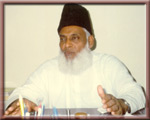
Israr Ahmed
Dr. Israr Ahmad is a world renowned Islamic thinker and scholar from Pakistan. He is known to many by his Lectures and Quranic Lessons through audio/video tapes available around the world, also through his books on various important Islamic topics.
He gave up his medical practice in 1970 and since then he has devoted his life for the study and teaching of Al-Qur’an.
Founder of “Markazi Anjuman Khuddam-Ul-Qur’an”, Lahore, Pakistan.
Completed his MBBS FROM King Edward Medical College in 1954.
From 1952-53 he was Nazim-e-A’la of Islamic Jamiat-e-Talaba, and in 1954 he joined Jamat-e-Islami. He however disassociated from it in 1957.
Completed his MA in Islamic Studies in 1965 from Karachi University, Pakistan.
In 1972 he founded Markazi Anjuman Khuddam-Ul-Qur’an The sole aim before The Markazi Anjuman Khuddam-Ul-Qur’an is to disseminate and propagate the knowledge and wisdom of The Holy Qur’an.
In 1975 he founded Tanzeem-e-Islami for establishing Deen through a truly revolutionary process derived from the Seerah of the Prophet Mohammed (SAS).
Markazi Anjuman Khuddam Ul Qur’an Quran Academy, 36-K Model Town, Lahore 54700, Pakistan Tel: 5869501 * Fax: 5834000
Postal Address : Markazi Anjuman Khuddam Ul Qur’an Quran Academy, 36-K Model Town, Lahore 54700, Pakistan Tel: 5869501 * Fax: 5834000

Blog Archive