Thursday, October 06, 2011

Realizing the Essence and Purpose of Hajj – II

http://main.islamweb.net/emainpage/index.php?page=articles&id=162265

5- Reminding of the Hereafter:
Hajj clearly reminds the slave of Allaah of the Last Day and the situations and terror it includes, through the following:
* Leaving his country and departing from his family. This reminds him of departing his country and family after death.
* Taking off form-fitting clothes and other adornments. This reminds him of the shroud as well as resurrection of the slaves of Allaah from their graves barefooted and uncircumcised on the Day of Judgment.
* Moving among the different places and facing hardship and exhaustion therein: this reminds him of the stress and hardships of the Day of Judgment when some of the slaves of Allaah will be  bridled by sweat.  
6- Teaching surrender and submission to Allaah The Almighty:
During Hajj, slaves of Allaah learn surrender, submission and absolute obedience to Allaah, the Lord of the worlds. This is achieved through two ways:
- The rites of Hajj such as taking off form-fitting clothes, abandoning adornment, Tawaaf, Sa‘y, staying at ‘Arafah, throwing the pebbles, spending the night in certain places, shaving or shortening one’s hair as well as other deeds that may have unclear rationales behind them. However, they are done in pure surrender to the command of Allaah The Almighty with no room for the slave's inclination or desires.
- The old memories that the rituals revive; memories that date back to the time of Ibraaheem (Abraham)  may  Allaah  exalt  his  mention and the consequences of surrender and submission to Allaah The Almighty, when a Hajj pilgrim prefers to please Allaah The Almighty than to satisfy his desires.  
7- Deepening the Islamic brotherhood and unity:
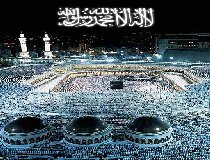
Despite the difference in languages, colors, countries and ethnics, all Hajj pilgrims gather in one place, at one time, with one appearance, repeat one slogan and do all these actions motivated by one thing which is belief in Allaah The Almighty and keenness on obeying His commands and avoiding His forbiddances. This deepens love among Hajj pilgrims and boosts good relations, cooperation, meditation, as well as enables them to exchange advice and share experiences.  This further encourages them to fulfill the requirements of that religion which gathered them and to spare no effort in striving to exalt it. 
8- Connecting the pilgrims to their predecessors:
The rituals of Hajj bring to the mind old memories: the migration of Ibraaheem  may  Allaah  exalt  his  mention as well as his wife and newborn to Hijaz, the story when he was commanded to slaughter his son, building the Ka‘bah, Ibraaheem’s call to people to perform Hajj. They also revive the memory of  Hajjatul-Wadaa‘ (the farewell pilgrimage), when the Prophet,  sallallaahu  `alayhi  wa  sallam ( may  Allaah exalt his mention ), performed Hajj along with one hundred thousand Companions  may  Allaah  be  pleased  with  them. The Prophet  sallallaahu  `alayhi  wa  sallam ( may  Allaah exalt his mention ) said to them: "Take your rituals from me."
During Hajj, one thinks of the different Islamic ages down to the present era,  when over two million Muslims  perform Hajj every year. This calls upon a pilgrim to remember these generations which attended the sacred places before him. He reflects on the creed-related struggle which took place between the monotheists and the polytheists and how the former sacrificed lives,  families, wealth and prestige for the sake of this religion. Hajj pilgrims also reflect on how stubborn and aggressive the polytheists were as they defended their interests and personal inclinations and desires.
 With such things, a pilgrim will realize the reasons behind destruction and salvation, and thereby he will be watchful to utilize the available means for salvation and consider himself a successor of those who were  saved, such as the prophets and the righteous Muslims. Meanwhile, he will avoid causes of destruction, consider himself an enemy to wrongdoers and be certain that victory and Paradise will be for the righteous. A Hajj pilgrim will also realize that the fate of all people is the same, which is death, and that he will leave the world just as they left. Therefore, he adheres to piety in order to rescue himself and taste peace and security between the hands of Allaah. 
9- Intensifying remembrance of Allaah The Almighty:
Reflecting on the rituals of Hajj, Talbiyah (saying: “Labayka Allaahuma Labayk”), Takbeer (saying: Allaah-u-Akbar) and supplications, etc, as well as the relevant Quranic and Prophetic texts, one observes that intensifying remembrance of Allaah The Almighty is one of the most prominent rationales and purposes behind Hajj. In the Quran, Allaah Says (what means): {But when you depart from ‘Arafat, remember Allaah at Al-Mash‘ar Al-Haraam.} [Quran 2: 198]
In a Hadeeth, the Prophet,  sallallaahu  `alayhi  wa  sallam ( may  Allaah exalt his mention ), said: "Tawaaf, Sa‘y between As-Safa and Al-Marwah, and throwing the pebbles are prescribed to establish remembrance of Allaah on earth."   
10- Training on orderliness and teaching discipline:
There are restrictions, limits, commitments and various disciplinary aspects for Hajj and a pilgrim is not permitted to violate them. Such things get the pilgrim used to loving order and maintaining it. Moreover, they teach a pilgrim to be committed through doing what is commanded and abandoning what is forbidden.  There are many, clear texts to indicate this.
11- Other benefits:
There are countless other benefits related to this life and to the Hereafter; and to individuals and community.  The abundance of benefits is expressed in the verse in which Allaah The Exalted Says (what means): {That they may witness benefits for themselves.} [Quran 22: 28]
We ask Allaah The Almighty to guide us and to provide us with the greatest share of these benefits!  

Realizing the Essence and Purpose of Hajj - I

http://www.islamweb.net/ehajj/index.php?page=article&lang=E&id=162261&button=Hajj 


When a Muslim realizes the essence of Hajj as well as the rationales and secrets behind it, this qualifies him to perform a valid and accepted Hajj. This is similar to humbleness in prayer. A person who has greater humility in prayer, his prayer is more likely to be accepted. The same applies to Hajj. The more a pilgrim is aware of the essence, spirit and rationales behind the Hajj as well as the purposes for which it has been prescribed and, further, he utilizes this to reform his creed and behavior, his Hajj will be more likely to be accepted and greatly rewarded and he will benefit more.
Nevertheless, no one will be able to achieve this unless he qualifies himself by actively seeking the secrets and rationale behind Hajj and reflecting on them. A Hajj pilgrim who does not attempt that ought to worry that his Hajj may amount to no more than a mixture of tourism and tiredness.
Here are some of the most important rationales and purposes behind Hajj that a pilgrim should realize:
1- Attaining piety:
One of the purposes behind Hajj is to attain piety. Piety is firmly and explicitly connected to Hajj in the relevant Quranic verses. Allaah The Exalted Says (what means):
·        {And complete the Hajj and ‘Umrah for Allaah……….. And be pious to Allaah.} [Quran 2: 196]
·        {And take provisions, but indeed, the best provision is piety.} [Quran 2: 197]
2- Firmly establishing and asserting Islamic monotheism in the heart and mind:
Hajj is based on dedicating one's intention to Allaah The Almighty and doing everything only for His Sake. Allaah The Exalted Says (what means):
·        {And complete the Hajj and ‘Umrah for Allaah.}[Quran 2: 196]
·        {So avoid the uncleanliness of idols and avoid false statement, Inclining [only] to Allaah, not associating [anything] with Him….} [Quran 22: 30-31]
Talbiyah which is the slogan of Hajj,  explicitly states dedicating worship to Allaah The Almighty alone: "Labbayka Allaahumma labbayk. Labbayka laa shareeka laka labbayk. Innalhamda wan-n‘imata laka walmulk, laa shareek lak (O Allaah, I answer Your Call, there is no partner to You, to You Alone belong praise, favor and sovereignty, there is no partner to You."
Hajj is also based on compliance to the methodology of the Prophet,  sallallaahu  `alayhi  wa  sallam ( may  Allaah exalt his mention ), and avoiding polytheism in obedience. To perform any of the Hajj rituals according to one's whims and inclinations is rejected. Rather, it is necessary to follow the example of the Prophet,  sallallaahu  `alayhi  wa  sallam ( may  Allaah exalt his mention ), and to adhere to his methodology.
3- Honoring the symbols of Allaah and what He deems sacred :
One of the most prominent purposes and rationales behind Hajj is getting  a slave of Allaah used to honor, exalt and love the symbols of Allaah The Almighty and what He deems sacred.  One has to fear violating or going against the forbiddances of Allaah The Almighty. In the course of the Quranic verses relevant to the Hajj, Allaah Says (what means): {That [is so]. And whoever honors the Symbols of Allaah - indeed, it is from the piety of hearts.} [Quran 22: 32]
4- Teaching noble morals and good characteristics:
a- Chastity:
Allaah Says (what means): {Hajj is [during] well-known months, so whoever has made Hajj obligatory upon himself therein [by entering the state of Ihraam], there is [to be for him] no sexual relations….}[Quran 2: 197] Foreplay is included as well.
b- Restraining anger and abandoning disputing and arguing:
Allaah Says (what means): {and no disputing during Hajj…} [Quran 2: 197] Commenting on the verse, ‘Ataa’  may  Allaah  have  mercy  upon  him said, "It refers to disputing with your companion until you anger him or he angers you." According to the preponderant view, it means stressing forbiddance of dispraised disputes only, which is arguing and disputing over matters which are useless under Sharee'ah (Islamic legislation).
c- Gentleness, leniency and tranquility:
When the Prophet,  sallallaahu  `alayhi  wa  sallam ( may  Allaah exalt his mention ), heard people harshly urge and beat camels upon leaving Muzdalifah, he remarked: "O people, be tranquil, because it is not hastiness that indicates righteousness.”
d- Self-denial and mingling with others:
During Hajj, a person denies himself, abandons everything with which distinguishes himself and becomes exactly like all his brothers in dress, saying the Talbiyah, moving from one place to another and acts of worship.
e- Teaching a Muslim how to bear the consequences of one's mistakes:
This clearly appears in the obligatory compensation (Fidyah) when a pilgrim deliberately violates one of the restrictions of Ihraam, stays in the wrong place on ‘Arafah or moves to Muzdalifah before sunset etc.
f- Teaching modesty:
This clearly appears through the unity of all pilgrims in rituals as well as in their experience and feelings. All material differences among pilgrims in terms of language, color or wealth, etc are denied. In the course of Khutbat Al-Wadaa‘ (the Farwell sermon), the Prophet,  sallallaahu  `alayhi  wa  sallam ( may  Allaah exalt his mention ), said: "O people, [mind that] your Lord is One and your father (i.e Adam) is one. Verily, except by piety, an Arab has no superiority over a non-Arab, a non-Arab has no superiority over an Arab, a red has no superiority over a black, and a black has no superiority over a red."
g- Teaching patience in all its aspects:
During Hajj, a pilgrim curbs his desires and inclinations by abstaining from anything that would violate his state of Ihraam. Furthermore, he abstains from some things which are permissible, when he is not in the state of Ihraam. A pilgrim exposes himself to hardship and exhaustion for the sake of obeying the commands of Allaah The Almighty to perform and complete the rituals of Hajj. This creates incentives within him to abandon acts of disobedience, obey Allaah The Almighty and bear hardship for the sake of pleasing Him even after Hajj is over.
h- Giving and generosity:
This clearly appears when the pilgrim pays the expenses of Hajj.

The accepted Hajj

http://www.islamweb.net/ehajj/index.php?page=article&lang=E&id=154988


The accepted Hajj

10/09/2010

It was narrated on the authority of Abu Hurayrah  may  Allaah  be  pleased  with  him that the Prophet,  sallallaahu  `alayhi  wa  sallam ( may  Allaah exalt his mention ), said:“The performance of two ‘Umrahs [lesser pilgrimage] expiates the sins that are committed in the interval between them, and the accepted Hajj commands no reward except Paradise.”[Al-Bukhaari and Muslim]
In another narration, it reads: “Two consecutive ‘Umrahs cause the sins which are committed therein between them to be forgiven, and the accepted Hajj commands no reward except Paradise.”[At-Tirmithi]
 
The Prophet,  sallallaahu  `alayhi  wa  sallam ( may  Allaah exalt his mention ), said: “Perform Hajj and ‘Umrah repeatedly for they both rid one of poverty and just sins as the blacksmith's bellows removes all impurities from iron and gold.”[At-Tirmithi, Ibn Maajah and An-Nasaa’i] The bellow is a tool that the blacksmith uses to purify his metals, this may be made clearer through the following Hadeeth that refers to Madeenah: “Madeenah is like a pair of bellows; it expels its impurities and brightens and clears its good.” [Al-Bukhaari and Muslim]
 
An Explanation of the Hadeeths
 
Scholars have said that the accepted Hajj is the one which is not mixed with any misdeed. Signs of the accepted Hajj include that the slave returns from Hajj as a better person than the one he was before he left and that he keeps away from sins. The accepted Hajj may also refer to the one performed truly and offered with full sincerity to Allaah The Almighty. Al-Qurtubi  may  Allaah  have  mercy  upon  him said, “All interpretations expressed about the accepted Hajj are correlative, confirming that it is the Hajj which fulfills its rulings and is performed perfectly as required of the Muslim.”
 
It was narrated on the authority of Jaabir  may  Allaah  be  pleased  with  him that the Prophet,  sallallaahu  `alayhi  wa  sallam ( may  Allaah exalt his mention ), said: “The accepted Hajj commands no reward but Paradise.” A man asked,“O Messenger of Allaah, how would Hajj be accepted?”He replied:“Feeding people and greeting each other with peace profusely.” [Ahmad and others] This shows what is meant by an accepted Hajj. The Prophet's saying: “The performance of two ‘Umrahs expiates the sins that are committed in the interval between them,” emphasizes the virtue of ‘Umrah and that it is recommended to perform it as much as one can afford to. Moreover, ‘Umrah causes the sins committed between two consecutive ‘Umrahs to be forgiven. The majority of scholars relied on this Hadeeth to affirm that it is recommended to perform ‘Umrah repeatedly. They stated that the whole year is a suitable time for ‘Umrah and that it becomes valid at any time except for the pilgrim who is performing the rituals of Hajj. Such a pilgrim cannot perform ‘Umrah until he has done his Hajj. A group of scholars held that ‘Umrah is obligatory for the Muslim only once throughout his lifetime, such as ‘Umar, Ibn ‘Umar, Ibn `Abbaas, Taawoos, ‘Ataa’, Ibn Al-Musayyib, Sa‘eed ibn Jubayr, Ahmad, Daawood and others. Maalik and Abu Haneefah are of the opinion that ‘Umrah is a recommended act and not an obligatory one.
 
Sins in the Prophet's saying: “The performance of two ‘Umrahs expiates the sins that are committed in the interval between them,” refer to the minor sins, not the major ones, as he said elsewhere that: “Sins committed between two consecutive Fridays are forgiven as long as major sins are not approached.”[Ibn Maajah] In Fat’h Al-Baari, Ibn Hajar  may  Allaah  have  mercy  upon  him said, “Some people are unsure as to the fact that ‘Umrah remits sins although avoiding major sins helps in attaining the forgiveness of [other sins], asking, ‘Which sins does ‘Umrah expiate then?’ The answer is that the expiation caused by ‘Umrah is limited to its time, whereas the expiation caused by keeping away from major sins is general and encompasses the whole lifetime of the Muslim, and it is in this aspect that they vary.”
 
The Prophet's saying: “They both rid one of poverty and sins,” implies that performing Hajj and ‘Umrah repeatedly causes a Muslim's wealth to accumulate. Although the Muslim may spend much money on Hajj or ‘Umrah, Allaah The Almighty compensates him with better than what he spent for the sake of obeying Him. Allaah The Almighty Says (what means): {But whatever thing you spend [in His cause] - He will compensate it; and He is the Best of Providers.} [Quran 34:39] 
 
We conclude this article with a tradition reported on the authority of ‘Umar  may  Allaah  be  pleased  with  him who once saw a caravan coming back from Hajj and remarked, “Had the caravan known about the grace and forgiveness they have attained, they would have stopped working. But nay, let them continue working [doing good deeds].” This shows that the pilgrim should not rely on his work, good deeds and acts of worship that Allaah favored him with during his Hajj. Rather, he should continue performing good deeds and acts of worship regularly till he meets Allaah The Almighty, as Allaah The Almighty Says (what means): {And worship your Lord until there comes to you the certainty [death].} [Quran 15:99]

Secrets and Targets of Hajj

http://www.islamweb.net/ehajj/index.php?page=article&lang=E&id=147883&button=Hajj

Allaah The Almighty Has Legislated acts of worship and rituals for great wisdom and important purposes. These acts of worship purify the souls and hearts and bring the slave closer to Allaah The Almighty. There are common meanings that are shared by all acts of worship, while there are other specific ones that are peculiar to every act of worship. One of the great acts of worship is Hajj that has great secrets and wisdom that should be realized, felt and contemplated by the pilgrims while performing this obligatory act so that the purpose and effect of Hajj would be achieved.  
Hajj is one of the greatest occasions when one is trained to fear Allaah The Almighty, honor His symbols and His sacred ordinances. Allaah The Almighty Says (what means): {That [is so]. And whoever honors the Symbols of Allaah - indeed, it is from the piety of hearts.} [Quran 22:32]
 
Allaah The Almighty Ordered the pilgrims to be provided with piety. Allaah The Almighty Says (what means): {Hajj is [during] well-known months, so whoever has made Hajj obligatory upon himself therein [by entering the state of Ihram], there is [to be for him] no sexual relations and no disobedience and no disputing during Hajj. And whatever good you do - Allaah Knows it. And take provisions, but indeed, the best provision is fear of Allaah. And fear Me, O you of understanding.} [Quran 2:197]
 
Allaah The Almighty Clarified that the purpose behind legislating sacrifices is acquiring piety. Allaah The Almighty Says (what means): {Their meat will not reach Allaah, nor will their blood, but what reaches Him is piety from you.} [Quran 22:37]
 
Hajj trains people to be obedient and submissive to Allaah because the pilgrims perform certain acts of worship that have unclear meanings. For instance, they do not wear their normal clothes, they avoid adornment, perform Tawaaf and Sa’y for seven rounds, stand at certain places on certain times, go to certain places at certain times, throw the pebbles and spend the night at Mina and other rituals of Hajj that the pilgrims perform without realizing their meanings. They only know that they perform these acts of worship out of obedience to Allaah and out of following the Sunnah of His Prophet  sallallaahu  `alayhi  wa  sallam ( may  Allaah exalt his mention ). ‘Umar ibn Al-Khattaab, May Allaah Be Pleased with him, said, when he wanted to kiss the black stone, “By Allaah! I know that you are a mere stone that can bring neither harm nor benefit and if I had not seen the Prophet  sallallaahu  `alayhi  wa  sallam ( may  Allaah exalt his mention ) kissing you, I would have never kissed you.”
 
Hajj stirs feelings of brotherhood among the believers and makes them feel the necessity of being united as the pilgrims gather at the same time in one place assuming the same appearance to supplicate one God (Allaah). Their aim and destination are the same. Thus, the pilgrims feel that this Ummah has potential to be united that is not owned by any other nation on earth. They also feel that they can do many things if their powers are united and their hearts are reconciled. This is a great feeling that one experiences only in such great occasions.
 
Hajj reminds the believer of the Day of Judgment along with its terrors that would make the children white-haired. When one sees the crowd, the loud voices of people and their noise while they are in the same place, wearing the same clothes and abandoning the joys of life and its adornment, he remembers the Day of Judgment.  On that day, people will be accounted by Allaah and they will stand naked and bare footed and the sun will be close to their heads. Remembering this situation will encourage one to work and get ready for the Hereafter.
 
During Hajj, the Muslims recall the memories of their ancestors from the prophets, scholars, pious and righteous people who went to this blessed House and trod on these great places. For instance, one may remember Ibraaheem (Ibrahim), May Allaah Exalt his mention, and his migration with his wife and the afflictions and miracles that took place there. Also, one may remember the story of Ismaa‘eel (Ishmael) the one who was to be sacrificed, May Allaah Exalt his mention, the building of the Ka‘bah, the proclamation of Hajj to the people, the Prophet  sallallaahu  `alayhi  wa  sallam ( may  Allaah exalt his mention ) who was brought up in this place, the persecution that he was subjected to at the hands of the disbelievers of the Quraysh, the Farewell Hajj, through which Allaah The Almighty Perfected the religion and Completed His favor, and other great memories that connect the Muslims to such a blessed convoy and make them feel the importance of following their guidance and methodology.
 
There are many other meanings and benefits that are unlimited. Some of these benefits were mentioned without specifying them to indicate that they are various and abundant. They were mentioned in the verse in which Allaah The Almighty Says (what means): {That they may witness benefits for themselves and mention the Name of Allaah on known days.} [Quran 22:28]


Online Application for Graduate Studies at KING FAHD UNIVERSITY ..last date:October 12

KING FAHD UNIVERSITY OF PETROLEUM & MINERALS (KFUPM)
DEANSHIP OF GRADUATE STUDIES
Dhahran, Saudi Arabia


The Deanship of Graduate Studies at King Fahd University of Petroleum and Minerals (KFUPM) is pleased to invite your attention that application to Graduate Studies at KFUPM is now open online from the linkhttp://www.kfupm.edu.sa/gs/application/preonline.asp until October 12, 2011KFUPM provides full MS and PhD scholarships for distinguished graduate applicants who demonstrate high potential for conducting original research in the fields of Engineering, Sciences and Business.

Distinguished Partnership of KFUPM with International Institutions

KFUPM has very strong collaborative partnership on conducting innovative research with the following international institutions:
  • MIT: Clean Water and Clean Energy research.
  • Stanford: Oil and Gas research.
  • California Institute of Technology (Caltech): Refining and Petrochemicals research.
  • Technical University of Munich: Refining and Petrochemicals research.
  • Cambridge University: Oil and Gas research.
  • Georgia Institute of Technology (Georgia Tech): Geo-signal Processing.
  • KAUST:  Many research disciplines in Engineering and Sciences.
  • Saudi Aramco (the largest oil company worldwide): Many research disciplines.
  • SABIC (one of the petrochemical companies worldwide): Refining, Petrochemical and Polymersresearch.
  • Many other world-class universities and industries on different research fields.
Centers for Research Excellence at KFUPM

To provide extreme support for research in areas of excellence, KFUPM has established the following Centers for Research Excellence:
The Research Institute

The Research Institute is the cornerstone of applied research activities at KFUPM, solving critical scientific and technical problems as well as working on turning knowledge into practice. More details are available on the website of the Research Institute at the link: http://www.kfupm.edu.sa/ri/

Research Groups at KFUPM

To provide special support for research in focused areas of interest to Saudi Arabia, KFUPM has established 13 Research Groups in Science and Engineering areas. More details are available on the website of the Deanship of Scientific Research at the link: http://www.kfupm.edu.sa/dsr/

Graduate programs offered at KFUPM

DISCIPLINE
DEGREES
M.Sc.
M.Sc.
M.B.A.
Ph.D., M.Sc.
Ph.D., M.Sc.
M.C.R.P.
Ph.D., M.Sc.
M.Sc.
M.Sc.
M.Sc.
Ph.D.
M.Sc.
Ph.D., M.Sc.
M.Sc.
Ph.D., M.Sc.
M.Sc.
Industrial & Systems Engineering
Ph.D., M.Sc.
M.Sc.
Ph.D., M.Sc.
Ph.D., M.Sc.
M. Med. Phys.
Ph.D., M.Sc.
Ph.D., M.Sc.
Ph.D., M.Sc.
Telecommunication Engineering
M.Sc.

Online Admission System

The online graduate admission application for the coming Spring Semester 2011-2012 (Starting in Feb. 2012) is now available until October 12, 2011 through this link: http://www.kfupm.edu.sa/gs/application/preonline.asp

After submission a complete online application, mandatory documents need to be uploaded before October 19, 2011 through the Upload System using the same Login ID and PIN created for the online application using this link: http://adgs.kfupm.edu.sa/  

Mandatory documents for application (without which application will not be processed)
  • Copy of identification (National ID for Saudi nationals / Passport for international applicants / Iqama for residents of Saudi Arabia).
  • Complete official transcripts for BS degree (and MS degree if applying to PhD).
  • Statement-of-Purpose (a one-page essay focusing on career and research goals at KFUPM).
  • Recommendation Letters from academic referees through the online recommendation system after submitting the online application.
  • Certificates for BS degree (and MS degree if applying to PhD) if available.
  • GMAT score (for international MBA applicants).
Other supporting documents (needed for final decision)
  • TOEFL score (min. is 68 IBT for MS and 79 IBT for PhD) or IELTS score (min. is 6 for MS and 6.5 for PhD).
  • Acceptable GRE General score (min. Quant. is 720, min. Analytical is 4.0).
  • Upon approval, original/certified copies of degree certificate(s) and transcript(s) are to be sent through postal mail.
Application Deadlines
  • Deadline for submitting the online application is October 12, 2011.
  • Deadline for uploading mandatory documents is October 19, 2011.
  • Deadline for recommendation letters to be received via the online recommendation system is October 19, 2011.
If there are any questions or further clarifications are required, please feel free to contact us at gs-admissions@kfupm.edu.sa or Telephone : +966-3-860-2800, or check our website at:http://www.kfupm.edu.sa/gs

We wish you the best in your endeavor.

Best regards,

Admission Office
Deanship of Graduate Studies
Tel: 00966-3860-2800
Fax: 00966-3860-2829
P.O. Box 5055
King Fahd University of Petroleum and Minerals (KFUPM)
Dhahran 31261
Saudi Arabia


Bhatt's wife: My husband is being treated like a terrorist

Communalism Watch: How we learned to suspect the other - The communal violence bill

Communalism Watch: How we learned to suspect the other - The communal violence bill

Blog Archive